Startup launches public API for its universal robot foundation model, aiming to simplify training for bimanual machines.
Key points
- Dream Labs secured $90 million in seed funding.
- The capital supports the launch of the Dream-1 foundation model API.
- The system controls robots using video prediction techniques.
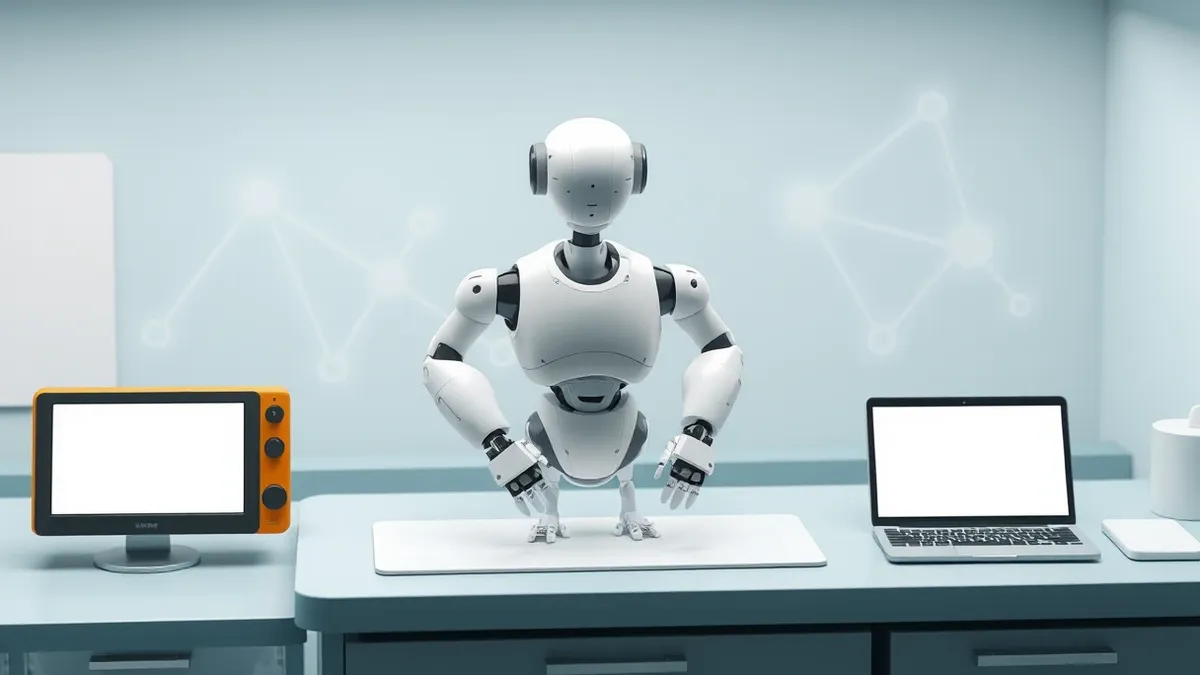
Dream Labs raised $90 million in seed funding to launch a public API for its Dream-1 robot foundation model. The startup aims to make industrial robots more intelligent and capable of performing diverse tasks beyond their original programming.
What happened
Dream Labs announced a $90 million seed funding round on October 19, 2026, according to SiliconANGLE. The investment was jointly led by B Capital and Kindred Ventures. Other participants included A.Capital, Unusual Ventures, Wing VC, SV Angel, Scribble VC, and angel investor Adrian Aoun. The funding coincides with the launch of a public application programming interface. This API provides access to Dream-1, the company’s universal robot foundation model. The model is designed to control bimanual robots it has never previously encountered. It operates in unfamiliar locations and performs tasks it was never explicitly shown. The service costs $3 per hour to use.
Why it matters
Modern industrial robots often lack adaptability. They are typically programmed for single, repetitive tasks. Retraining them for new jobs requires specialized expertise. This process is time-consuming and expensive. When new hardware arrives, developers must start the programming process from scratch. This limits the widespread adoption of flexible automation in factories and warehouses. A universal model could reduce these barriers by standardizing how robots learn new skills.
The fix
No software vulnerability or security flaw was reported in this announcement. Dream Labs is introducing a new commercial product and service. There is no patch, update, or mitigation required for users or developers at this time. The company is simply launching a new API for controlling robotic hardware.
Why it matters
Organizations adopting new automation tools should evaluate vendor reliability. Teams usually assess the scalability of API services before integration. Check whether the provider offers clear documentation for error handling. Verify that the model can adapt to your specific hardware constraints. Ensure that data privacy policies cover video feeds used for training. Monitor performance metrics to confirm cost-effectiveness over time.
Background: Privacy policies
Most people treat privacy policies as contracts they can enforce or technical manuals they can verify. They are actually legal disclosures that define how companies handle data. You cannot audit the code through the text. You cannot sue because a policy is vague. Understanding this distinction prevents wasted effort and false confidence.
Read the full guide: Privacy Policies: What They Actually Do and How to Read Them
What to do and how to stay safe: Dream Labs
- Review the Dream Labs API documentation to understand integration requirements.
- Test the Dream-1 model with your specific robotic hardware in a sandbox environment.
- Evaluate the $3/hour cost against your current robotic automation expenses.
- Monitor the startup’s development updates for new features or model improvements.
Step-by-step guide: What is password policies and how they protect systems
General security guidance from the Crypt Weekly newsroom. It is not confirmed advice from the organisations named in this story.
Frequently asked questions
How much funding did Dream Labs raise?
Dream Labs raised $90 million in seed funding.
What is the Dream-1 model?
It is a universal robot foundation model that controls bimanual robots using video prediction.
Who led the investment round?
The round was jointly led by B Capital and Kindred Ventures.