Jensen Huang told German leaders that future manufacturing will rely on digital twins and AI-driven factories, outlining a software-centric vision for industry.
Key points
- Jensen Huang spoke at the Invest in Germany Summit in Berlin.
- He predicted every company will operate both a physical and a digital factory.
- Huang stated workers will build digital brains for products shipped by companies.
Nvidia CEO Jensen Huang presented a vision for German manufacturing at the Invest in Germany Summit. He told Chancellor Friedrich Merz that future companies will rely heavily on digital twins and artificial intelligence.
What happened
According to Gizmodo, Jensen Huang shared his outlook during a meeting with German Chancellor Friedrich Merz at the Kraftwerk Berlin venue. The event was part of the Invest in Germany Summit held on Monday. Huang was asked to describe the future of manufacturing for the audience.
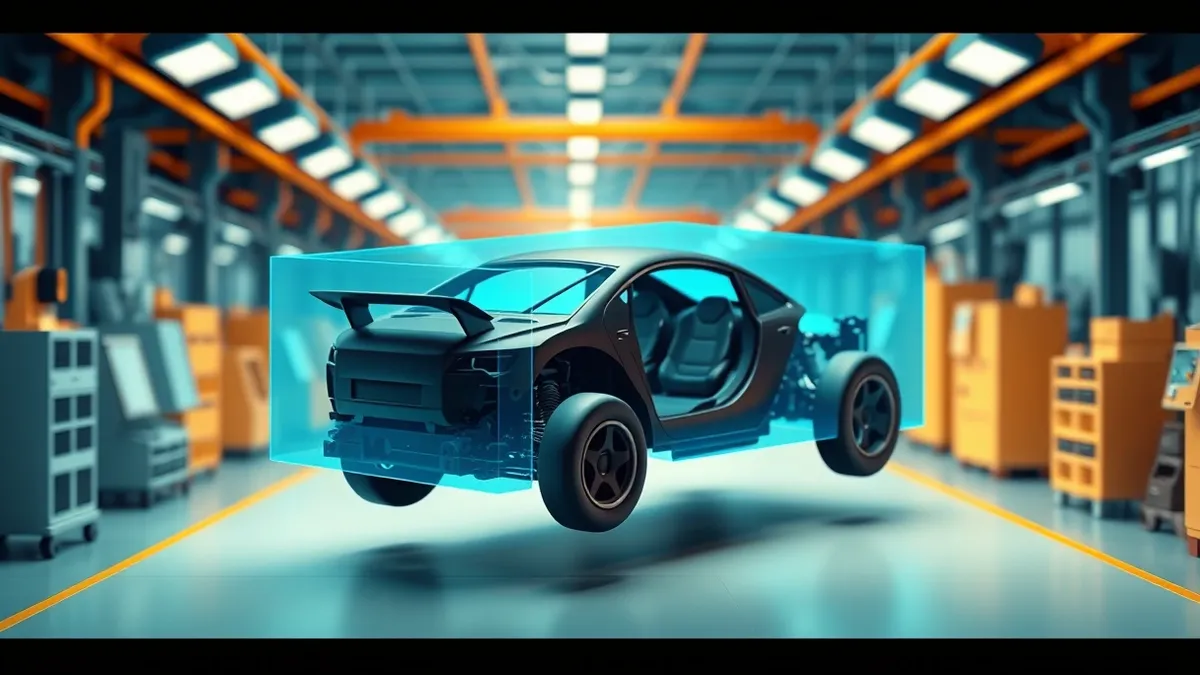
He stated that every company will eventually operate two distinct factories. One will be the physical facility, while the other will be a digital replica. He claimed the digital version will become so accurate that it is effectively real.
Huang predicted that most workers in Germany will operate within these digital environments. They will construct digital versions of cars and other products. These digital items will contain digital brains powered by artificial intelligence.
The physical factories will use AI-driven robots to build the final goods. Huang emphasized that all processes will be completely software-driven. He concluded that companies will focus on building two main things: the brains themselves and the brains embedded in shipped products.
Why it matters
Digital twins are virtual replicas of physical systems that allow teams to test changes safely. This concept helps organizations spot errors before they reach the factory floor. Understanding this shift is key to following modern industrial trends.
AI-driven automation changes how workers interact with production lines. Instead of manual labor, employees may manage software models. This requires new skills in data management and system oversight.
Software-defined manufacturing means updates can improve performance remotely. Teams must ensure their digital models stay synchronized with physical reality. Misalignment between the two can cause costly production failures or safety risks.
The fix
- Verify that digital models match current physical equipment specifications.
- Train staff on managing software-driven production workflows.
- Implement strict version control for digital twin data.
- Monitor AI recommendations for anomalies before deployment.
Why it matters
Organizations adopting digital twins must prioritize data integrity above speed. Teams usually start by mapping critical assets to their virtual counterparts. Check whether your current infrastructure supports real-time synchronization between physical and digital states.
Security teams should treat digital twins as critical assets. Access controls for these models must be as strict as for production systems. Ensure that staff understand the difference between testing in a digital environment and deploying to physical hardware.
What to do and how to stay safe: Nvidia
- Review your organization's current use of digital modeling tools.
- Assess whether staff have training in software-defined manufacturing concepts.
- Check if your digital replicas are updated in real-time with physical data.
- Ensure access to digital twin environments is restricted to authorized personnel.
Step-by-step guide: What is password policies and how they protect systems
General security guidance from the Crypt Weekly newsroom. It is not confirmed advice from the organisations named in this story.
Frequently asked questions
Where did Jensen Huang make these comments?
He spoke at the Invest in Germany Summit in Berlin, specifically at the Kraftwerk Berlin venue.
What did Huang say workers will do in the future?
He stated that most people in Germany will work inside a digital twin of their company, building digital cars.
What are the two things companies will build according to Huang?
He said every company will build brains and the brains that go into the products they ship.