Warp Sciences secures major funding to use AI robots for synthesizing compounds, aiming to reshore biotech work away from overseas contractors.
Key points
- Kevin Weil, former OpenAI science lead, founded Warp Sciences to automate wet-lab tasks using AI-driven robotics.
- The startup raised $215 million in a round led by Lightspeed, valuing the company at $865 million.
- The goal is to reshore drug development from China to reduce geopolitical supply-chain risks and accelerate research.
Kevin Weil, a former science lead at OpenAI, has launched Warp Sciences to automate drug discovery using robots. The new startup secured $215 million in funding to build AI systems that can synthesize and test chemical compounds around the clock.
What happened
Former OpenAI science lead Kevin Weil announced the launch of Warp Sciences on X, revealing the company’s focus on automating wet-lab work. According to TechCrunch, the startup raised $215 million in a financing round led by Lightspeed. Other participants included IVP, Premji Invest, and Lux Capital. Weil stated the company is valued at $865 million.
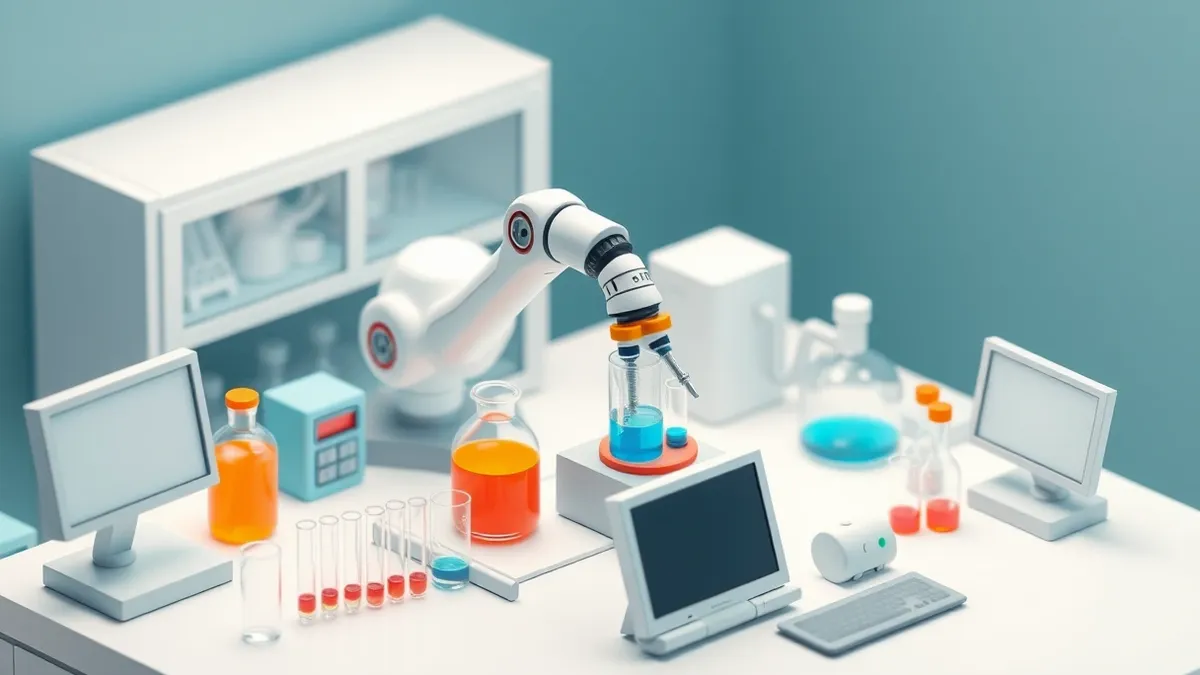
Human chemists at Warp Sciences wear cameras and sensor gloves to train robots on various laboratory tasks. This process allows the machines to replicate complex procedures for synthesizing molecules. The automation aims to speed up drug discovery by enabling continuous operation without human fatigue.
Why it matters
Biotech firms have historically outsourced labor-intensive molecular synthesis to contractors in China, such as WuXi AppTec. Weil hopes Warp Sciences can reshore this work to the United States. This shift aims to insulate the drug development pipeline from geopolitical supply-chain disruptions. Automating these tasks also reduces reliance on manual labor, potentially lowering costs and increasing the speed of research cycles.
The fix
- Monitor official channels for updates on Warp Sciences' operational milestones and robot deployment.
- Review current supply-chain dependencies for critical research materials or synthesis services.
- Evaluate internal processes for potential automation opportunities in repetitive laboratory tasks.
- Stay informed about regulatory changes affecting AI-driven biotech research and data privacy.
Why it matters
Teams usually assess supply-chain resilience by mapping out critical dependencies and identifying single points of failure. In biotech, relying on overseas contractors for synthesis can introduce delays and geopolitical risks. Organizations should check whether their research pipelines are vulnerable to external disruptions. Diversifying suppliers or bringing critical processes in-house can mitigate these risks. Automation offers a path to greater control over quality and timing, but it requires careful implementation to ensure safety and accuracy.
What to do and how to stay safe: Warp Sciences
- Review your organization's supply-chain risks for critical research materials and synthesis services.
- Identify repetitive laboratory tasks that could benefit from automation to improve efficiency and reduce errors.
- Stay informed about regulatory requirements for AI-driven biotech research and data privacy compliance.
- Evaluate the potential impact of geopolitical events on your research pipeline and develop contingency plans.
Step-by-step guide: What is password policies and how they protect systems
General security guidance from the Crypt Weekly newsroom. It is not confirmed advice from the organisations named in this story.
Frequently asked questions
Who founded Warp Sciences?
Warp Sciences was founded by Kevin Weil, a former science lead at OpenAI.
How much funding did Warp Sciences raise?
The startup raised $215 million in a round led by Lightspeed, with participation from IVP, Premji Invest, and Lux Capital.
What is the goal of Warp Sciences?
Warp Sciences aims to automate wet-lab work for drug discovery using AI robots, helping to reshore biotech research and reduce supply-chain risks.