Voice calls bypass email filters and screen alarms, allowing attackers to exploit human trust and urgency to steal access credentials before you realize the danger.
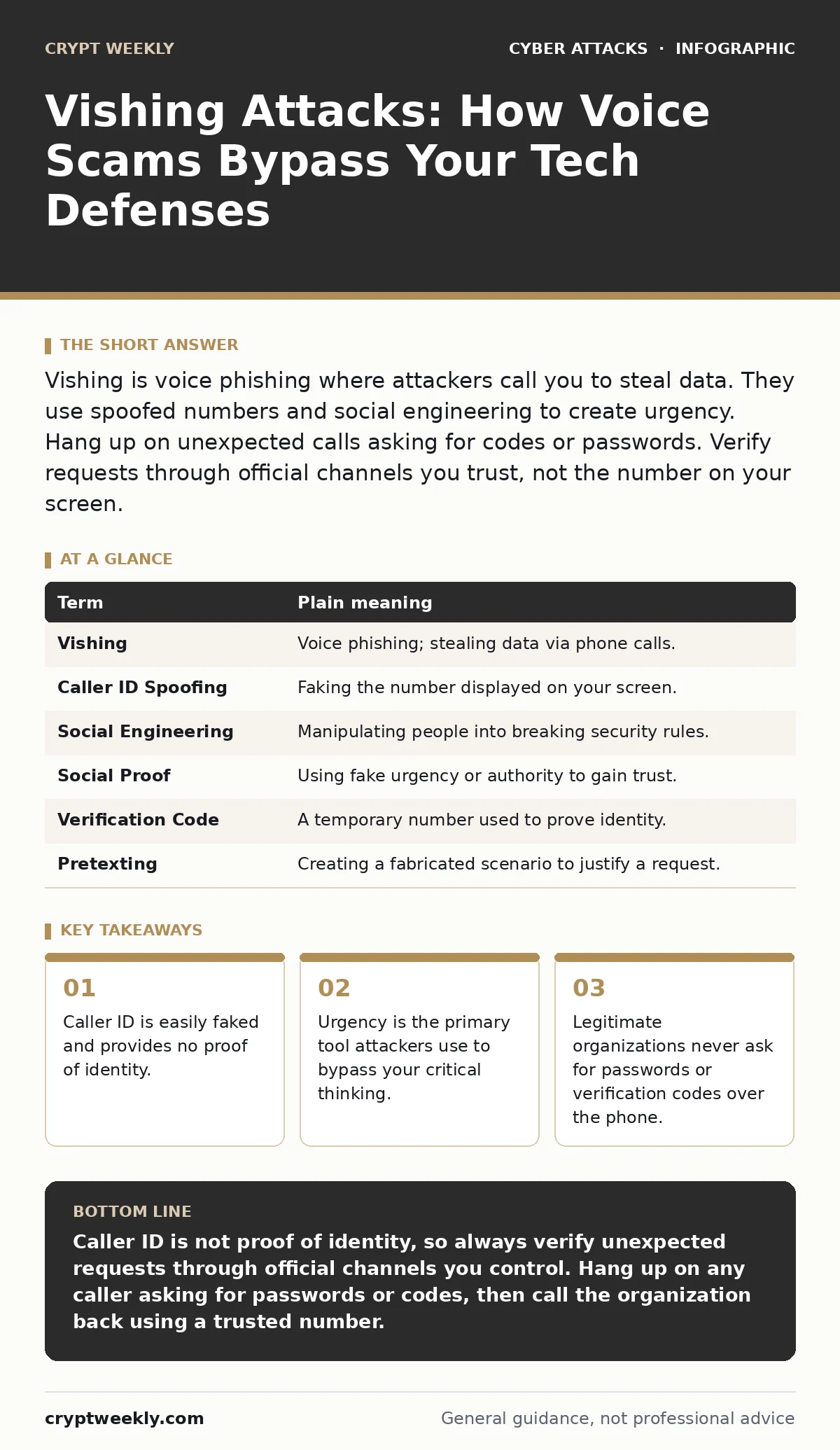
Vishing is voice phishing where attackers call you to steal data. They use spoofed numbers and social engineering to create urgency. Hang up on unexpected calls asking for codes or passwords. Verify requests through official channels you trust, not the number on your screen.
The Wrong Number That Knows Too Much
Imagine you receive a call from your bank. The caller ID shows the official local number. The voice is calm and professional. They claim they detected suspicious activity and need you to verify your identity immediately to prevent freezing. You feel relief mixed with panic. You want to help, but you also want to protect your money. This tension is exactly what the attacker engineered.
This is not a helpful customer service rep. It is a vishing attack. The term combines "voice" and "phishing." Just as email phishing casts a wide net for data, vishing uses the telephone to cast that net. The difference is the medium. Email allows you to scan a message, check the sender, and think. A phone call demands immediate attention. It interrupts your day and creates a social obligation to be polite and cooperative.
Why the Phone Is a Dangerous Channel
Email filters can block millions of messages before they reach your inbox. They scan for known bad links and suspicious language. Your phone has no such filter for voice calls. When the phone rings, it is a direct line to your ears. There is no subject line to inspect. There is no chance to pause and research the sender.
Attackers rely on this immediacy. They know that a ringing phone triggers a psychological response. You answer because you expect a human connection. You listen because hanging up feels rude or risky. This social pressure lowers your defenses. The attacker does not need to hack your computer. They only need to hack your behavior. They want you to act before you think.
The Mechanics of Trust and Fear
The attacker’s goal is to bypass your logical brain. They do this by creating a crisis. Imagine the caller says your account is compromised and will be closed in ten minutes unless you act. Your heart rate rises. Your focus narrows. You stop considering whether the bank would really call you. You only care about stopping the threat.
This is a classic social engineering tactic. The attacker manipulates your emotions to override your security habits. They might use fear, greed, or authority. They might pretend to be IT support, a government agency, or a family member in trouble. The specific story matters less than the emotional reaction it provokes. If you feel rushed, you are likely being manipulated.
| Term | Plain meaning |
|---|---|
| Vishing | Voice phishing; stealing data via phone calls. |
| Caller ID Spoofing | Faking the number displayed on your screen. |
| Social Engineering | Manipulating people into breaking security rules. |
| Social Proof | Using fake urgency or authority to gain trust. |
| Verification Code | A temporary number used to prove identity. |
| Pretexting | Creating a fabricated scenario to justify a request. |
The Illusion of a Safe Caller ID
Many people trust the number they see on their screen. This is a dangerous mistake. Caller ID spoofing is easy and cheap. An attacker can make their call appear to come from your bank, your employer, or even a number you recognize. The technology behind this is widely available and requires no special skills.
Do not trust the display. Trust the context. If you did not initiate the call, treat it with suspicion. If the caller asks for personal information, assume they are lying. The number on your screen is just text. It can be changed by anyone with a dialing tool. It is not a badge of authenticity. It is a costume.
How to Spot the Trap
The biggest red flag is a request for sensitive data. Legitimate organizations will never ask for your password, full social security number, or one-time verification codes over the phone. They already have your account details. They do not need you to send them to a stranger.
If a caller asks for a code sent to your phone, they are trying to hijack your account. This is often part of an account takeover attempt. They want to reset your password using the code you just received. By giving them the code, you are handing them the keys to your digital life. Hang up immediately. Do not engage. Do not explain why you are hanging up.
See also: OAuth Consent Phishing: How Attackers Bypass Login Screens · Stop Server Cryptomining: 7 Configuration Mistakes That Invite Theft
Simple Habits for Phone Safety
You can protect yourself without expensive software. The best defense is a change in routine. Treat unexpected calls as suspicious by default. If you are not expecting a call, let it go to voicemail. Scammers rarely leave detailed messages because they want real-time interaction.
When you do answer, control the conversation. Do not give personal details first. Ask the caller to identify themselves and their company. Then verify that information independently. Look up the official contact number for the organization. Call them directly. Ask if they are trying to reach you. This breaks the attacker’s chain of control.
- Hang up on pressure. If a caller demands immediate action, end the call. Real emergencies allow time for verification.
- Verify independently. Never use the number provided by the caller. Use a number you already trust, such as one on a statement.
- Never share codes. One-time passwords and verification codes are your secret key. Keep them secret.
The Human Firewall
Technology cannot stop vishing because the attack targets you, not your device. Your phone works correctly. Your internet connection is secure. The breach happens in your mind. You are the gateway. By changing how you respond to calls, you close that gateway.
This approach protects you from related threats as well. For example, shoulder surfing relies on people revealing information in public. Being mindful of what you say on the phone applies to what you say in person. Similarly, understanding phishing in email helps you recognize the same tricks in voice. The medium changes, but the manipulation remains the same.
Taking Control of Your Calls
You do not need to fear your phone. You just need to respect the risk. Every unexpected call is a test of your discipline. Pass the test by verifying before trusting. This habit takes seconds but saves hours of recovery.
Scammers rely on your politeness and your hurry. Deny them both. Be slow. Be skeptical. Be safe. Your data is valuable, and your attention is the prize. Guard both fiercely.
Key takeaways
- Caller ID is easily faked and provides no proof of identity.
- Urgency is the primary tool attackers use to bypass your critical thinking.
- Legitimate organizations never ask for passwords or verification codes over the phone.
Caller ID is not proof of identity, so always verify unexpected requests through official channels you control. Hang up on any caller asking for passwords or codes, then call the organization back using a trusted number.
Frequently asked questions
Can I block vishing calls with my phone settings?
You can block specific numbers, but attackers constantly change them. Blocking is not a reliable defense against spoofed calls.
What if the caller knows my name and address?
Attackers often buy data from breaches. Knowing your name does not mean they are who they claim to be. It just means they have data on you.
Is it safe to give my account number to verify identity?
You can give your account number if you initiated the call. Never give it to an inbound caller who contacts you first.
How do I report a vishing attempt?
Report it to your phone carrier and the organization impersonated. This helps them update their filters and warn other customers.
How this guide was produced: written by the Crypt Weekly editorial team with AI assistance, checked against the public references listed below, and reviewed when the facts change. See our editorial policy or report an error.