
Your medical records can be hijacked to claim insurance benefits, creating debt and errors that distort your actual health history.
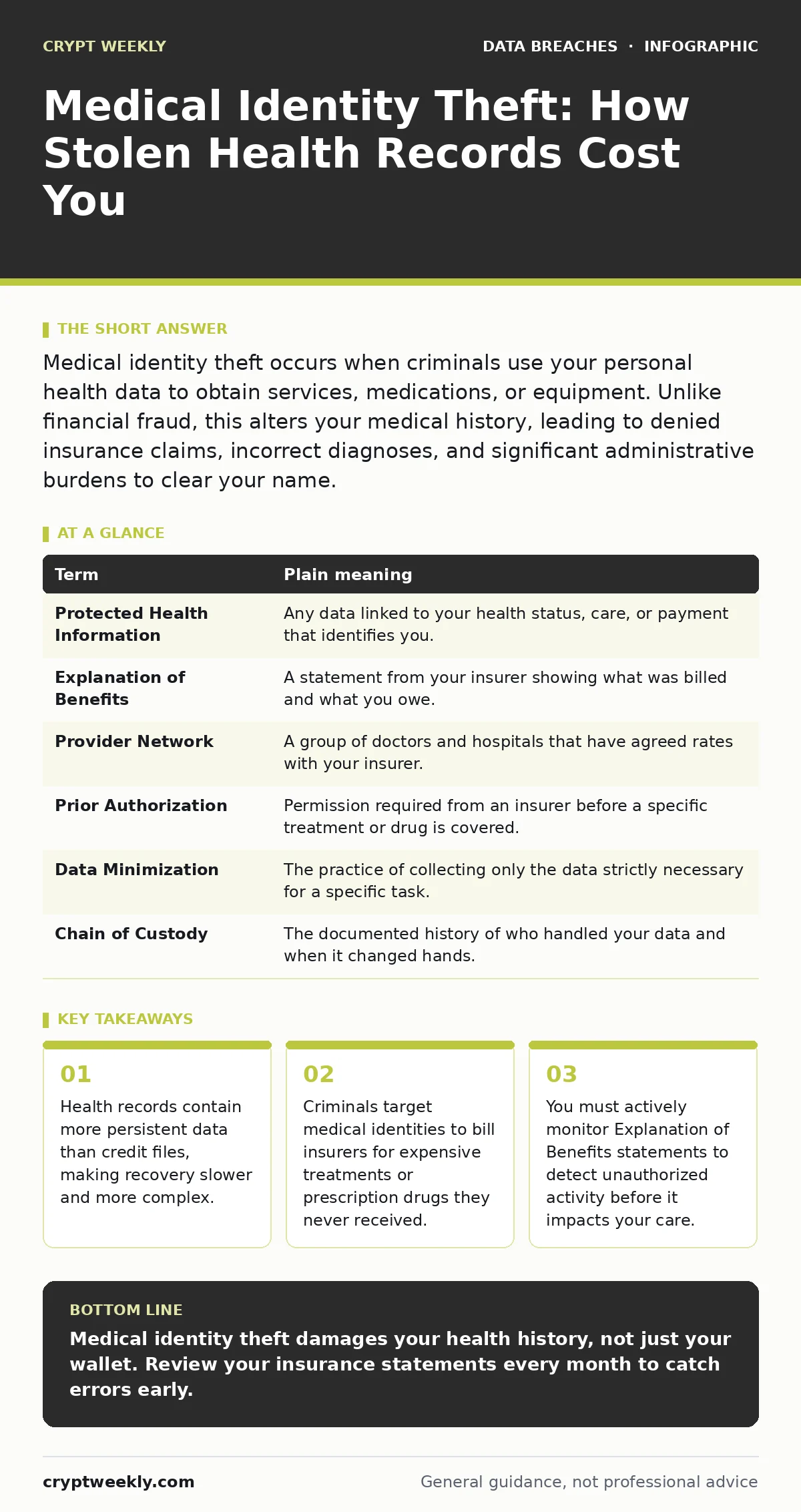
Medical identity theft occurs when criminals use your personal health data to obtain services, medications, or equipment. Unlike financial fraud, this alters your medical history, leading to denied insurance claims, incorrect diagnoses, and significant administrative burdens to clear your name.
The Library Card Analogy
Imagine your medical record is a library card. A normal library card tracks books you borrow. If someone steals it, they take books home. You notice missing books and pay a small fee. Medical identity theft is different. The thief uses your card to check out dangerous materials or rare items. They return them damaged or lost. The library now thinks you borrowed these items. Your record shows you read controversial texts. Future librarians judge you based on those false checkouts. Your reputation is ruined by actions you did not take.
This analogy highlights the core difference. Financial theft takes money. Medical theft takes your history. The damage is not just monetary. It is informational. The system believes the thief is you. This confusion persists because health records are rarely audited by the patient in real time. You do not see every doctor visit or lab result instantly. The thief exploits this blind spot. They insert false data into your permanent file. This false data becomes part of your truth.
Key Terms in Plain English
Understanding the mechanics requires clear definitions. These terms define how your data moves and where it breaks.
| Term | Plain meaning |
|---|---|
| Protected Health Information | Any data linked to your health status, care, or payment that identifies you. |
| Explanation of Benefits | A statement from your insurer showing what was billed and what you owe. |
| Provider Network | A group of doctors and hospitals that have agreed rates with your insurer. |
| Prior Authorization | Permission required from an insurer before a specific treatment or drug is covered. |
| Data Minimization | The practice of collecting only the data strictly necessary for a specific task. |
| Chain of Custody | The documented history of who handled your data and when it changed hands. |
Why Health Data Is High Value
Criminals prefer medical data over credit card numbers. Credit cards can be canceled. Health records are permanent. You cannot cancel your identity. You cannot reset your medical history. The data remains useful for years. It contains your name, birth date, Social Security number, and insurance policy details. This combination allows fraudsters to open new accounts or claim existing benefits.
They use this data to bill for expensive services. Imagine a thief uses your insurance to get a knee replacement. They never get the surgery. They get the cash or the equipment. The insurer pays the bill. The thief disappears. You are left with the debt. The insurer denies your future claims because your policy limits are exhausted. The system sees your account as used. You are the victim of a resource drain you cannot easily stop.
The Hidden Cost of Confusion
The immediate loss is money. The long-term loss is trust in your own record. Suppose a thief adds a history of diabetes to your file. Years later, you need surgery. The anesthesiologist checks your record. They see diabetes. They adjust your medication dosage based on that false history. You receive the wrong dose. The error stems from data pollution. The medical team trusts the digital record. The record is wrong. You suffer consequences for a crime you did not commit.
This scenario is not rare. False histories lead to denied coverage. Insurers may refuse to cover conditions they believe you already have or have excluded. You must prove you are not the person in the record. This process is slow. It requires letters, phone calls, and legal documentation. The burden of proof falls on you. The system assumes the record is correct. You must fight the system to correct it.
Simple Safety Habits
You cannot stop all theft. You can reduce the surface area for attacks. Start with your mail. Do not leave insurance statements in the mailbox. Pick them up immediately. Shred them before disposal. These statements contain the policy numbers thieves need. They are the key to the library card.
Review your Explanation of Benefits monthly. Log in to your insurer portal. Check every line item. Look for services you did not receive. Look for medications you did not pick up. If you see a charge for a hospital visit you did not take, call the insurer. Dispute it immediately. This step is critical. It stops the fraud before it becomes a permanent part of your history. It also alerts the insurer to potential compromise.
See also: Mistakes That Trigger Tax Identity Theft and How to Stop Them · What Does Data Minimization Mean and How to Apply It
Protecting Your Digital Footprint
Healthcare apps and portals are convenient. They are also targets. Use unique passwords for every health portal. Do not reuse passwords from email or banking. If one site is breached, the thief has your health credentials. Enable multi-factor authentication. This adds a second check. Even if the thief has your password, they cannot log in without your phone or token.
Be careful with shared devices. Do not log into health portals on public computers. Clear your browser history and cache afterward. Log out explicitly. Do not just close the tab. The session may remain active. Someone else could open the tab and see your data. This applies to mobile devices too. Ensure your phone has a passcode. If you lose your phone, the thief cannot access your health apps. This relates to mobile device management principles, where access controls are strict.
When Things Go Wrong
If you suspect theft, act fast. Contact your insurer. File a fraud report. Ask for a fraud alert on your account. This prevents new charges from being processed. Contact the providers involved. Tell them you did not receive care. Ask them to remove your information from their billing systems. This is hard. Providers often have rigid policies. You may need to provide police reports.
Keep a log of every call. Write down the date, time, and name of the person you spoke to. Save all letters and emails. This documentation is your chain of custody. It proves you acted promptly. It helps prove the charges were fraudulent. Without this record, you are just a patient disputing a bill. With it, you are a victim of identity theft. The difference matters for insurance coverage and legal recourse.
The Role of Data Hygiene
Organizations hold your data. They must protect it. Look for providers that practice data minimization. They should only collect what they need. If a clinic asks for your full birth certificate when you need a flu shot, that is excessive. The more data they hold, the more valuable they are to attackers.
Ask about their security practices. Do they use encryption? Do they have a plan for healthcare data breaches? You do not need to be an expert. Just ask. If they cannot answer, consider another provider. Your data is yours. They are just holding it for you. Trust is earned through transparency.
Key takeaways
- Health records contain more persistent data than credit files, making recovery slower and more complex.
- Criminals target medical identities to bill insurers for expensive treatments or prescription drugs they never received.
- You must actively monitor Explanation of Benefits statements to detect unauthorized activity before it impacts your care.
Medical identity theft damages your health history, not just your wallet. Review your insurance statements every month to catch errors early.
Frequently asked questions
How is medical identity theft different from tax identity theft?
Tax identity theft involves filing false returns to steal refunds. Medical theft uses your identity to obtain healthcare services. Both use personal data, but medical theft alters your permanent health record.
Can I sue the hospital if my data was stolen?
You may have legal options depending on local laws and negligence. However, proving direct damages from a breach is complex. Focus on stopping the fraud first. Consult a lawyer for specific advice.
Does health insurance cover costs from identity theft?
Standard health plans do not cover fraudulent charges. Some plans offer identity theft protection services. Check your policy documents. These services may help with monitoring and recovery costs.
How long does it take to clear my name?
It varies. Simple billing errors may take weeks. Complex cases involving multiple providers can take months or years. Persistence and documentation are key to speeding up the process.
How this guide was produced: written by the Crypt Weekly editorial team with AI assistance, checked against the public references listed below, and reviewed when the facts change. See our editorial policy or report an error.