Tax identity theft often stems from overlooked administrative gaps like unmonitored mail and weak secondary authentication, not just stolen passwords.
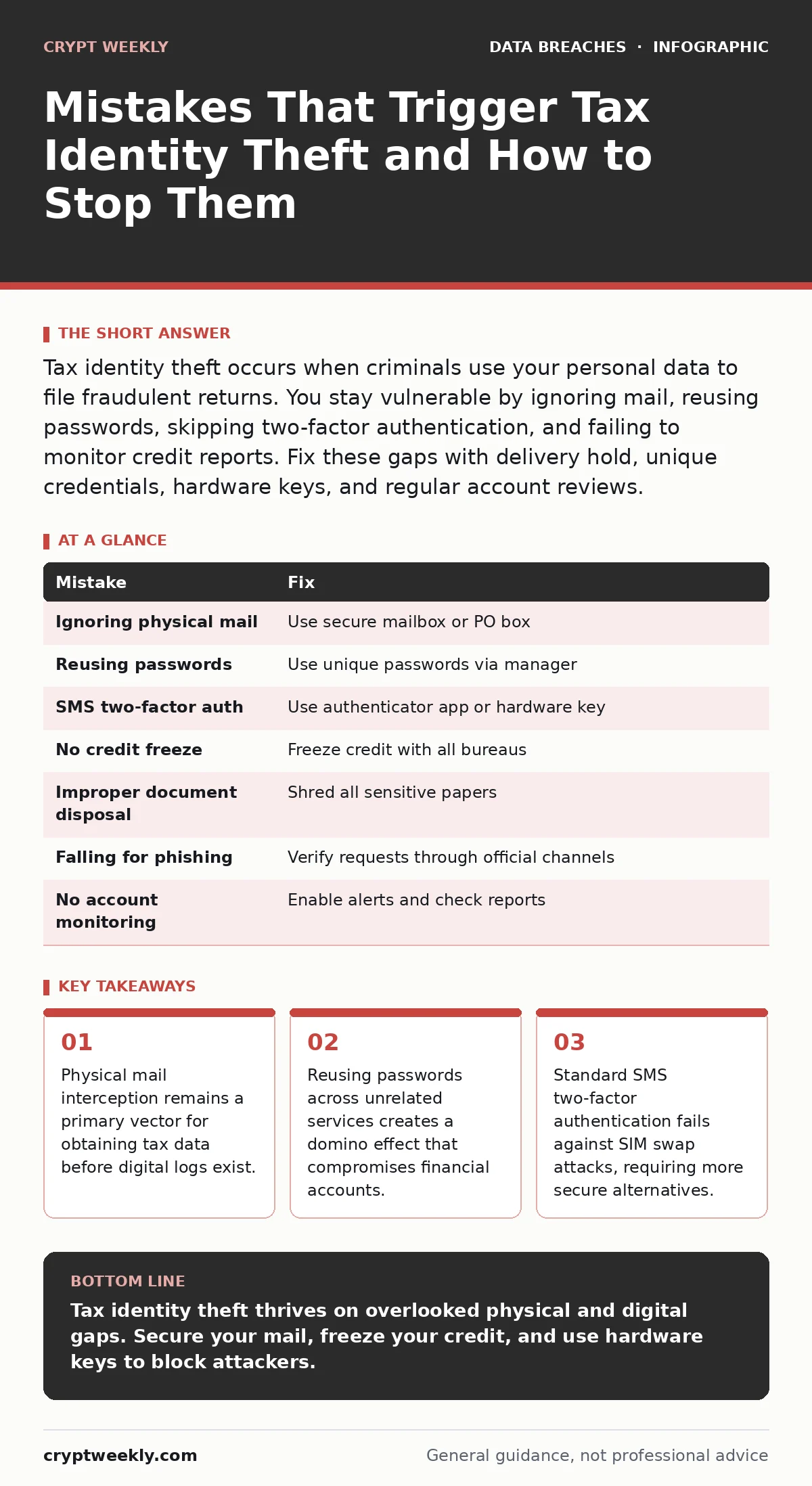
Tax identity theft occurs when criminals use your personal data to file fraudulent returns. You stay vulnerable by ignoring mail, reusing passwords, skipping two-factor authentication, and failing to monitor credit reports. Fix these gaps with delivery hold, unique credentials, hardware keys, and regular account reviews.
Mistake 1: Ignoring physical mail delivery
Most people focus on digital security while ignoring the physical paper trail. Tax agencies still send pre-filled forms, notices, and verification letters via postal mail. Thieves intercept these documents to gather the exact data needed to file a fraudulent return.
Why it hurts:
A stolen piece of paper provides your name, address, and often partial identification numbers. This physical data allows an attacker to bypass initial digital checks. You lose control of your tax identity before you even see the fraud alert.
The fix:
Use a secure mailbox or a PO box. Place a hold on your mail when you travel. If you receive a notice about a return already filed, contact the tax authority immediately. Treat physical mail with the same caution as digital emails.
Mistake 2: Reusing passwords across financial accounts
You likely use the same password for your email, banking, and tax preparation software. This convenience creates a single point of failure. If one service suffers a breach, attackers test those credentials on every other major platform.
Why it hurts:
Credential stuffing attacks automate the login process across thousands of sites. When attackers find a match, they gain access to your tax account. They can then file a return, claim your refund, and redirect it to their account. Your digital identity is fully compromised.
The fix:
Use a password manager to generate unique, complex passwords for every account. This ensures that a breach at one vendor does not expose your tax credentials. Review your active sessions regularly. Consider access reviews for any shared family financial accounts.
Mistake 3: Relying on SMS for two-factor authentication
Many users enable two-factor authentication but choose the SMS text message option. This method sends a code to your phone number. Attackers can hijack this number through a process known as SIM swapping.
Why it hurts:
SIM swapping tricks your carrier into moving your phone number to a new SIM card controlled by the attacker. They then receive your login codes. This bypasses your password entirely. You cannot stop the fraud because the attacker has your verification method.
The fix:
Switch to an authenticator app or a hardware security key. These methods do not rely on your phone number. They generate codes locally or use cryptographic signatures. This eliminates the risk of SIM swapping. Stolen session tokens become useless if the attacker cannot bypass the hardware key.
Mistake 4: Failing to freeze your credit
Credit freezes are free tools that block access to your credit report. Many people leave their credit active, assuming their good score protects them. This assumption leaves your identity open to new account applications.
Why it hurts:
Thieves use your personal data to open new lines of credit or loans. These debts appear on your record and damage your financial standing. They may also use these new accounts to launder money or file fraudulent tax returns. The damage compounds over time.
The fix:
Place a security freeze on your credit files with all three major bureaus. This prevents anyone, including yourself, from opening new credit. You can temporarily lift the freeze when you need to apply for legitimate credit. This simple step blocks most identity theft attempts.
Mistake 5: Discarding sensitive documents improperly
Tax documents, bank statements, and pre-approved credit offers contain enough information to impersonate you. Throwing these papers in the regular trash is an invitation for dumpster divers.
Why it hurts:
Shredded documents are difficult to reconstruct. Whole documents are easy to read. Attackers collect these papers to build a complete profile of your financial life. They use this data to answer security questions and verify identity. Your physical waste becomes a digital threat.
The fix:
Shred all documents containing personal information before disposal. Use a cross-cut shredder for better security. This destroys the data physically. Combine this with digital hygiene. Mobile device management policies should also cover how employees handle physical records.
See also: What Does Data Minimization Mean and How to Apply It · Why is Chain of Custody Crucial for Evidence Integrity
Mistake 6: Ignoring phishing emails and calls
Phishing attempts mimic tax authorities and banks. They create urgency, claiming you owe money or have a pending refund. Clicking links or calling provided numbers leads to credential theft.
Why it hurts:
These scams exploit fear and urgency. You bypass normal caution and hand over your login details. Attackers use this information immediately. They often combine this with data from previous breaches. The result is a fully compromised account.
The fix:
Never click links in unsolicited emails. Navigate directly to the official website. Verify phone numbers through official channels. Be skeptical of urgent requests. This aligns with SOC 2 principles of access control and user awareness. Treat every unexpected request as suspicious.
Mistake 7: Not monitoring account activity
Many people wait for the tax season to check their accounts. This delay gives attackers months to operate undetected. Early detection is the only way to mitigate damage effectively.
Why it hurts:
Fraudulent activity often starts with small transactions or login attempts from unknown locations. Ignoring these signs allows the attacker to escalate. By the time you notice a missing refund, the money is gone. Recovery is difficult and time-consuming.
The fix:
Enable account alerts for any login or filing activity. Check your credit report regularly. Use free annual reports or continuous monitoring services. This helps catch medical identity theft and financial fraud early. Backup testing ensures your data remains intact during investigations.
| Mistake | Fix |
|---|---|
| Ignoring physical mail | Use secure mailbox or PO box |
| Reusing passwords | Use unique passwords via manager |
| SMS two-factor auth | Use authenticator app or hardware key |
| No credit freeze | Freeze credit with all bureaus |
| Improper document disposal | Shred all sensitive papers |
| Falling for phishing | Verify requests through official channels |
| No account monitoring | Enable alerts and check reports |
Key takeaways
- Physical mail interception remains a primary vector for obtaining tax data before digital logs exist.
- Reusing passwords across unrelated services creates a domino effect that compromises financial accounts.
- Standard SMS two-factor authentication fails against SIM swap attacks, requiring more secure alternatives.
Tax identity theft thrives on overlooked physical and digital gaps. Secure your mail, freeze your credit, and use hardware keys to block attackers.
Frequently asked questions
How do I know if my tax ID was stolen?
Check for unexpected notices from the tax authority. Look for unfamiliar login attempts or filed returns you did not submit. Monitor your credit report for new accounts.
Can I undo a credit freeze quickly?
Yes, you can lift a freeze temporarily or permanently online. Most bureaus process this within minutes. Keep your PIN safe to manage these changes.
Is password rotation effective against identity theft?
Password rotation helps if you suspect a breach. However, unique passwords are more important. Changing the same weak password repeatedly offers little protection.
What if I receive a notice for a return I didn't file?
Contact the tax authority immediately. File a fraudulent return report. This prevents the thief from claiming your refund. Monitor your account closely afterward.
How this guide was produced: written by the Crypt Weekly editorial team with AI assistance, checked against the public references listed below, and reviewed when the facts change. See our editorial policy or report an error.