
A data protection officer does not fix security flaws but acts as an internal watchdog to ensure legal compliance and manage data flow risks.
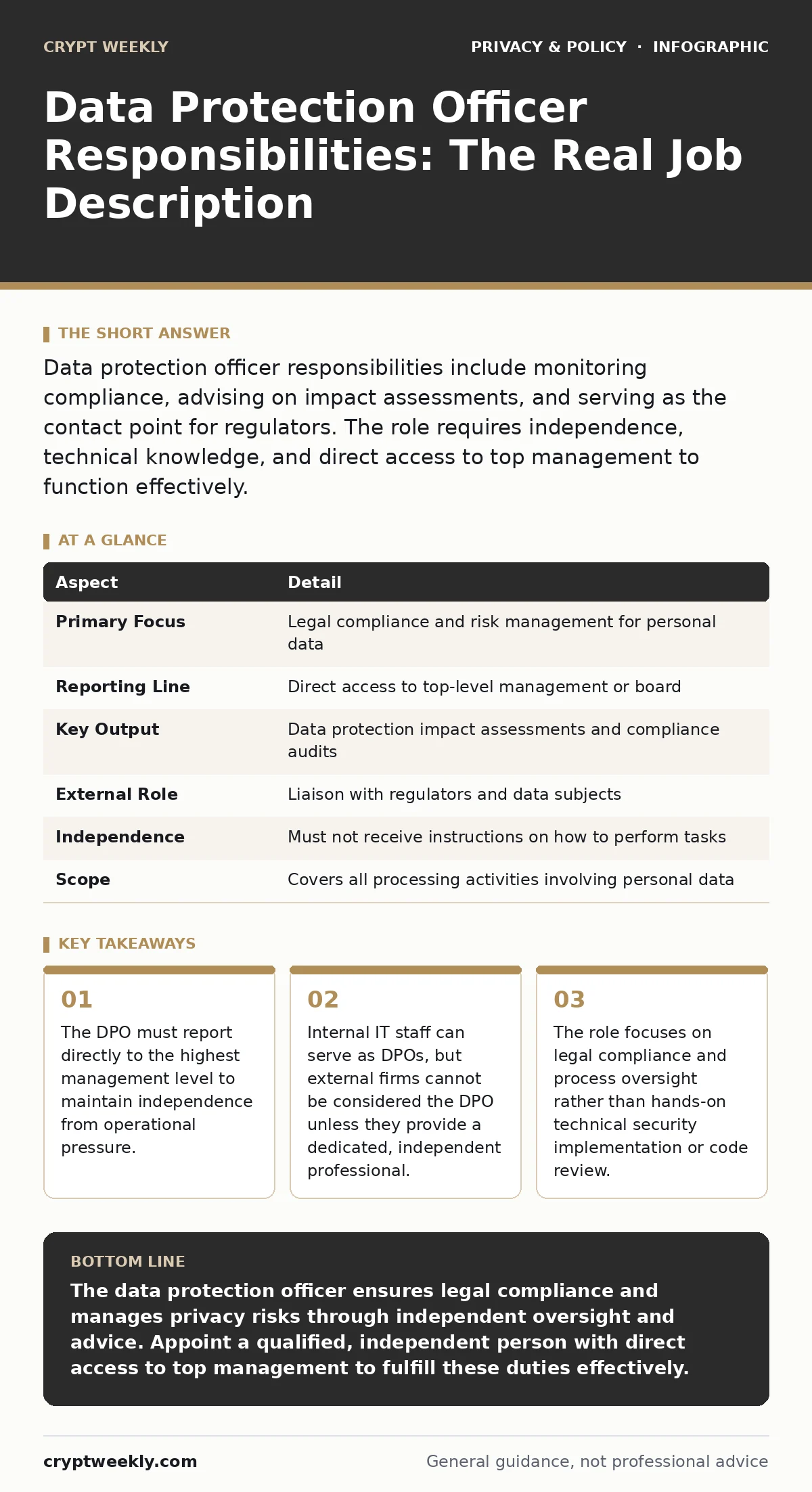
Data protection officer responsibilities include monitoring compliance, advising on impact assessments, and serving as the contact point for regulators. The role requires independence, technical knowledge, and direct access to top management to function effectively.
An Everyday Analogy for Privacy Oversight
Imagine a large restaurant kitchen. The head chef decides what dishes to cook and how to prepare them. The waiters take orders and deliver food. The health inspector checks that the kitchen follows safety codes, keeps temperatures correct, and prevents contamination. The health inspector does not cook the food. The inspector does not decide the menu. The inspector ensures the environment meets legal safety standards so no one gets sick.
A data protection officer functions like this health inspector for personal information. They monitor processes to ensure legal standards are met. They do not build the systems that store the data. They do not write the software code. This separation of duties prevents conflicts of interest. If the person building the system also audits it, they may overlook flaws to protect their own work. The DPO provides an independent check on how data moves through the organization.
What Are Data Protection Officer Responsibilities?
Data protection officer responsibilities center on three main pillars: monitoring, advising, and liaising. The DPO monitors compliance with relevant privacy laws and internal policies. This involves regular audits of data processing activities. The DPO advises the organization on when a data protection impact assessment is required. These assessments evaluate the risk to individuals’ rights before new projects begin. The DPO serves as the single point of contact for data subjects and supervisory authorities.
When a user asks about their data rights, the DPO helps facilitate the response. When regulators investigate a breach, the DPO coordinates the organization’s reply. This role requires deep knowledge of legal requirements and technical architecture. The DPO must understand how data flows through servers, databases, and third-party services. They must translate legal jargon into technical requirements for engineers. They must translate technical constraints into legal risks for executives.
| Aspect | Detail |
|---|---|
| Primary Focus | Legal compliance and risk management for personal data |
| Reporting Line | Direct access to top-level management or board |
| Key Output | Data protection impact assessments and compliance audits |
| External Role | Liaison with regulators and data subjects |
| Independence | Must not receive instructions on how to perform tasks |
| Scope | Covers all processing activities involving personal data |
Who Needs a Data Protection Officer?
Not every organization requires a dedicated DPO. The need depends on the scale and nature of data processing. Large organizations that process large amounts of personal data usually need one. Public authorities and bodies generally require a DPO regardless of size. Organizations whose core activities involve regular and systematic monitoring of individuals on a large scale must appoint one. This includes companies that track user behavior for advertising or analytics. Organizations that process special categories of data must also appoint a DPO.
Special categories include health records, genetic data, biometric data, and political opinions. The threshold for "large scale" varies by jurisdiction and context. A small startup processing health data may need a DPO. A large retailer processing only payment data may not. You must evaluate the sensitivity of the data and the frequency of processing. If you are unsure, the cost of non-compliance often exceeds the cost of hiring a DPO. The role can be filled by one person or a team. It can be an internal employee or an external service provider.
How the Role Works in Practice
The DPO does not work in isolation. They embed themselves in the development lifecycle of new products. This practice is known as privacy by design. The DPO reviews project proposals early in the process. They identify potential privacy risks before code is written. They collaborate with product managers and engineers to mitigate these risks. For instance, they might recommend data minimization techniques. Data minimization means collecting only the data strictly necessary for the purpose. They might suggest pseudonymization. Pseudonymization replaces identifiable information with artificial identifiers.
The DPO also manages the register of processing activities. This register documents what data is collected, why it is collected, and where it is stored. It provides a clear map of data flows within the organization. The DPO uses this map to assess risks and ensure transparency. They train staff on data handling procedures. They investigate complaints from users about their data. They maintain a calm presence during incidents. When a breach occurs, the DPO guides the response team on notification requirements. They ensure the organization informs regulators and affected individuals within the legal timeframes.
Common Misconceptions About the Role
Many organizations misunderstand the DPO’s authority and function. A common error is treating the DPO as a security officer. Security focuses on protecting systems from unauthorized access. Privacy focuses on lawful and fair handling of personal data. A secure system can still violate privacy laws if it collects unnecessary data. The DPO does not manage firewalls or patch servers. They ensure the data collected by those servers is lawful. Another misconception is that the DPO is liable for breaches. The DPO advises on compliance.
The decision to follow or ignore advice rests with management. Management bears the legal responsibility for compliance. The DPO must be able to demonstrate they provided correct advice. This distinction protects the DPO from unfair blame. It also ensures management takes ownership of privacy risks. Organizations must not penalize the DPO for raising concerns. The DPO must feel safe to report non-compliance. If the DPO is threatened or fired for doing their job, the organization fails its legal obligations. The DPO’s independence is a legal requirement, not a suggestion.
See also: Anonymization vs De-identification: How to Choose the Right Data Strategy · What Is GDPR in Cyber Security: Rules, Scope, and Practical Steps
What You Should Do About It
If your organization triggers the requirements, you must act quickly. First, identify the right person for the role. Look for a mix of legal knowledge and technical understanding. They must understand how databases work and how APIs transfer data. They must also know the specific privacy laws applicable to your region. Check if you need to reference GDPR for European operations. Ensure the person has direct access to the board or CEO. Remove them from daily operational decisions that they might later audit. This structural separation is critical for independence. Draft a clear job description that outlines their authority.
Publish their contact details to the public. Data subjects must know how to reach them. Integrate the DPO into your vendor management process. Third-party processors introduce significant risk. Review the guide on cross-border data transfers to understand international complications. Ensure your contracts with vendors include strict data protection clauses. The DPO should review these contracts before signing. Build a culture where privacy is a shared responsibility. The DPO cannot do it alone. They need cooperation from every department. Train your staff on basic privacy principles. Make the DPO an accessible resource, not a gatekeeper.
Integrating Privacy Into Daily Operations
Privacy cannot be an afterthought. It must be woven into daily operations. The DPO should participate in product meetings. They should review marketing campaigns for consent issues. They should audit data retention policies. Data retention means keeping data only as long as necessary. Deleting old data reduces risk and storage costs. The DPO helps define these retention periods. They ensure automated deletion processes work correctly. They monitor for "function creep." Function creep happens when data collected for one purpose is used for another. For example, using employee location data for productivity tracking without consent.
The DPO flags these deviations. They work with HR to update policies. They collaborate with IT to implement technical controls. These controls might include access logs and encryption. While the DPO does not manage two-factor authentication for personal accounts, they ensure the organization’s systems use strong authentication. They verify that only authorized personnel can access sensitive data. This verification process is ongoing. The DPO conducts periodic reviews to ensure controls remain effective. They update advice as laws and technologies change.
The Long-Term Value of the Role
A well-functioning DPO adds value beyond compliance. They build trust with customers. Users are more likely to share data with organizations that demonstrate transparency. This transparency can be a competitive advantage. The DPO helps craft clear privacy policies that users can actually understand. They move away from legalese toward plain language. This clarity reduces confusion and support tickets. The DPO also protects the organization from reputational damage. Privacy breaches erode trust quickly.
A proactive DPO prevents these breaches by identifying risks early. They create a framework for responsible data use. This framework supports innovation. Companies that respect privacy can experiment with new technologies safely. They avoid the pitfalls of misuse. The DPO enables this safe experimentation. They provide the guardrails that allow creativity to flourish. Over time, this leads to a more resilient organization. It adapts to changing regulations and user expectations. It stays ahead of potential scandals. The DPO is an investment in long-term stability.
Key takeaways
- The DPO must report directly to the highest management level to maintain independence from operational pressure.
- Internal IT staff can serve as DPOs, but external firms cannot be considered the DPO unless they provide a dedicated, independent professional.
- The role focuses on legal compliance and process oversight rather than hands-on technical security implementation or code review.
The data protection officer ensures legal compliance and manages privacy risks through independent oversight and advice. Appoint a qualified, independent person with direct access to top management to fulfill these duties effectively.
Frequently asked questions
Can the CEO be the data protection officer?
No, the CEO cannot be the DPO because they make the decisions the DPO must audit. This conflict of interest violates the independence requirement.
Does the DPO need to be a lawyer?
A legal background is helpful but not strictly required. The DPO needs expert knowledge of data protection law and technical understanding of data processing.
How often should the DPO audit the organization?
The DPO should conduct regular audits, typically annually, and whenever significant changes occur in data processing activities or legal requirements.
What happens if the DPO recommends a change that management rejects?
The DPO must document their advice and the management’s decision. This record proves the DPO fulfilled their duty to advise, shifting liability to management.
How this guide was produced: written by the Crypt Weekly editorial team with AI assistance, checked against the public references listed below, and reviewed when the facts change. See our editorial policy or report an error.