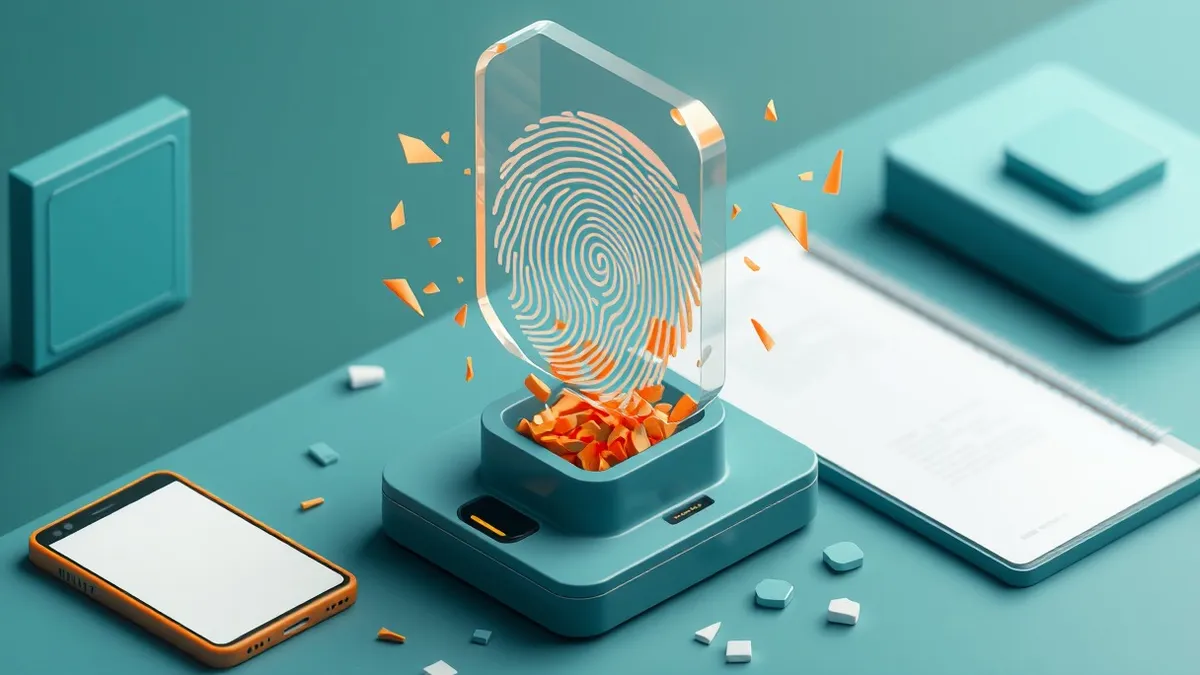
Biometric templates are not passwords; they are immutable identity markers that change how you handle breach containment and user trust.
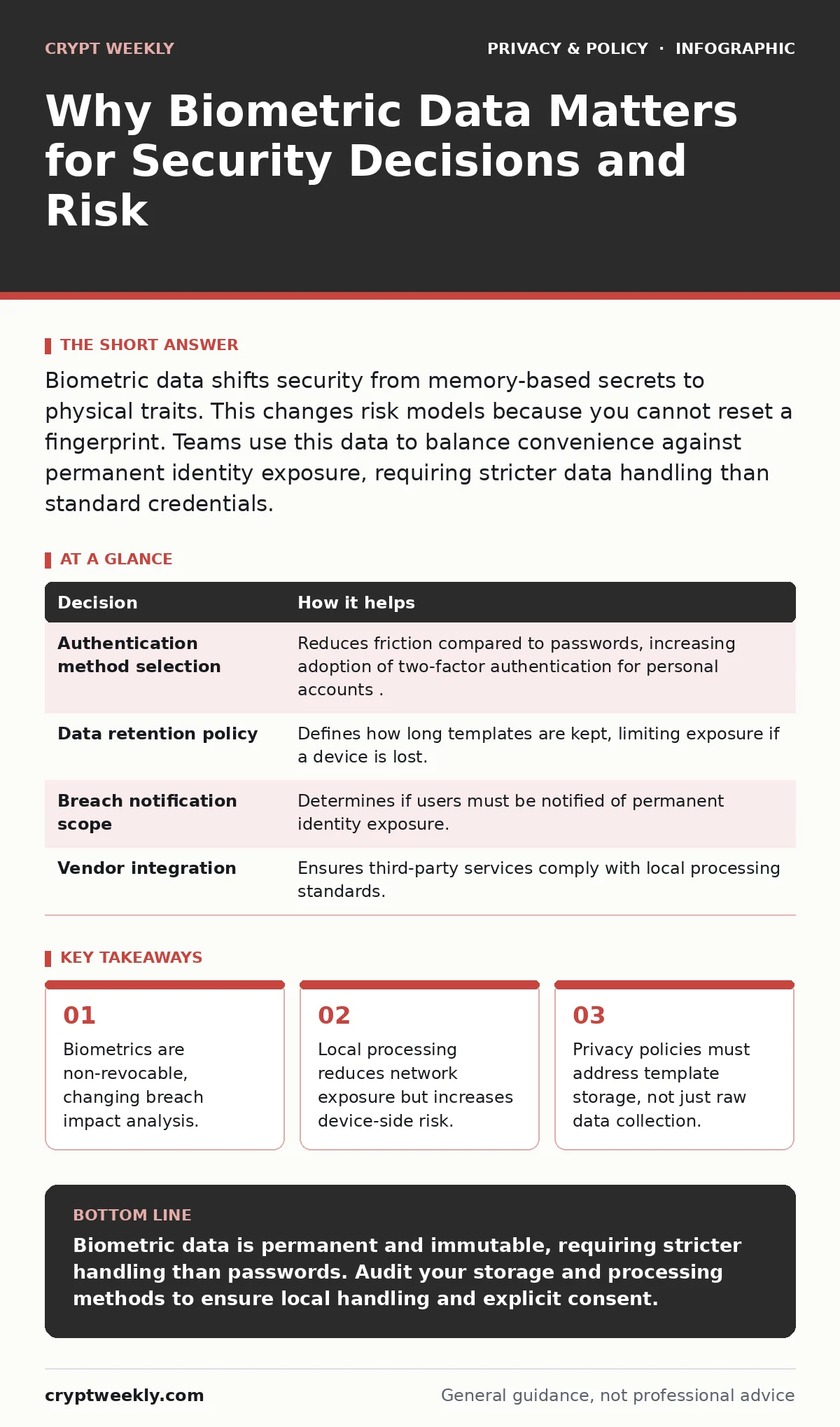
Biometric data shifts security from memory-based secrets to physical traits. This changes risk models because you cannot reset a fingerprint. Teams use this data to balance convenience against permanent identity exposure, requiring stricter data handling than standard credentials.
The Immutable Identity Problem
You treat passwords as disposable keys. If a password leaks, you change it. The old key no longer works. Biometric data behaves differently. Your fingerprint or facial structure does not change when a breach occurs. You cannot revoke your iris pattern. This permanence alters how security teams calculate risk. They must assume that if biometric data is stolen, the identity compromise is permanent for that specific trait.
This distinction forces a shift in architecture. Systems cannot rely on biometrics as the sole secret. They act as a factor, not a vault. The security value comes from the difficulty of replication, not the secrecy of the data itself. You must design systems that accept the possibility of permanent template exposure.
Local Processing Versus Central Storage
Many systems process biometric matches on the device rather than sending raw data to a server. This is called local processing. The device creates a mathematical representation of your biometric feature, known as a template. It compares new scans against this local template. The server never sees the raw image or the template.
This approach reduces the attack surface for network-based theft. However, it moves the risk to the physical device. If an attacker gains physical access to the device, they may extract the template from secure hardware enclaves. The trade-off is clear: you trade central database risk for local device risk. Teams must decide which risk profile fits their threat model.
Decision Framework for Biometric Use
Teams use biometric data to inform specific security and privacy decisions. These decisions shape the user experience and the legal liability of the organization. You must evaluate each decision against the permanence of the data.
| Decision | How it helps |
|---|---|
| Authentication method selection | Reduces friction compared to passwords, increasing adoption of two-factor authentication for personal accounts. |
| Data retention policy | Defines how long templates are kept, limiting exposure if a device is lost. |
| Breach notification scope | Determines if users must be notified of permanent identity exposure. |
| Vendor integration | Ensures third-party services comply with local processing standards. |
This table shows how biometrics influence operational choices. Each choice carries a weight. You cannot treat biometric decisions like password policy updates. The stakes are higher because the remediation path is limited.
The Template Is Not the Image
A common misunderstanding is that the stored data is a picture of your face or a scan of your finger. It is not. The system converts the biometric feature into a hash or template. This template is a one-way mathematical representation. You cannot reconstruct the original image from the template.
This distinction matters for privacy and security. If attackers steal the template, they cannot print a fake finger or face easily. They need the template to spoof the system. However, if the template format is known, attackers can craft synthetic inputs that match it. This is a replay attack. The security depends on the complexity of the template and the liveness detection mechanisms.
Edge Cases in Liveness Detection
Liveness detection ensures the biometric input comes from a live person, not a photo or mask. Systems use various methods to check this. Some require blinking or turning the head. Others analyze texture and depth. These checks add friction to the user experience.
You face a trade-off here. Stricter liveness detection reduces spoofing risk but increases false rejection rates. Users with certain medical conditions or disabilities may struggle with specific checks. For example, a user who cannot blink on command may be locked out. Teams must balance security against accessibility. Ignoring this balance leads to exclusion and support costs.
This connects to broader privacy concerns. Similar to browser fingerprinting, biometric systems can inadvertently collect data about user behavior and physical traits. You must ensure that the collection is minimal and purpose-specific. Excessive data gathering violates privacy principles and increases liability.
See also: What Does Data Minimization Mean and How to Apply It · Anonymization vs De-identification: How to Choose the Right Data Strategy
Policy and Legal Implications
Biometric data is often classified as sensitive personal information. Laws in various regions impose strict rules on its collection and use. You must have explicit consent for biometric processing. Implicit consent through terms of service is rarely sufficient.
Teams must prepare for data subject access requests that ask for biometric data deletion. Since templates are stored locally or in secure enclaves, deletion can be technically complex. You must have a process to verify deletion. Failure to delete data upon request can lead to significant legal penalties.
This also affects how you handle end-to-end encryption. If biometric templates are stored remotely, they should be encrypted in transit and at rest. The keys for this encryption must be managed securely. If the key is compromised, the encrypted templates are vulnerable. You must integrate biometric security into your broader encryption strategy.
What Goes Wrong Without Clear Guidelines
Without clear policies, teams often default to convenience. They may store raw biometric data for debugging or analytics. This creates a high-value target for attackers. It also violates user trust. When users discover their biometric data was stored unnecessarily, they lose confidence in the product.
Another failure mode is inadequate breach response. Teams may treat a biometric breach like a password leak. They send reset emails. This is ineffective. Users cannot reset their fingerprints. The response must include identity protection services and clear communication about the permanent nature of the exposure.
Integrating With Existing Security Layers
Biometrics should not replace other security measures. They complement them. Use them to enhance password managers for families or enterprise systems. They provide a convenient way to unlock secure storage. However, the master key or seed should remain protected by other means.
This layered approach ensures that if one layer fails, others remain. If a biometric template is stolen, the attacker still needs the password or hardware token. This defense-in-depth strategy is critical. You must design your system to fail securely. If biometrics are unavailable, fall back to a secure alternative.
Next Steps for Implementation
Start by auditing your current biometric usage. Are you storing raw data or templates? Is processing local or remote? Review your consent mechanisms. Ensure they are explicit and informed. Update your breach response plan to address the permanent nature of biometric exposure.
Consult with legal and privacy teams early. Biometric regulations are strict and evolving. Do not wait for a breach to address these issues. Proactive management reduces risk and builds user trust. Remember that security is a continuous process. Regularly review your biometric security controls.
Key takeaways
- Biometrics are non-revocable, changing breach impact analysis.
- Local processing reduces network exposure but increases device-side risk.
- Privacy policies must address template storage, not just raw data collection.
Biometric data is permanent and immutable, requiring stricter handling than passwords. Audit your storage and processing methods to ensure local handling and explicit consent.
Frequently asked questions
Can biometric data be hacked?
Yes, attackers can steal biometric templates or spoof sensors. However, the risk depends on whether data is stored locally or centrally. Local storage reduces large-scale theft risks.
Is biometric data safer than passwords?
It is more convenient but not necessarily safer. Passwords can be changed; biometrics cannot. Biometrics resist remote guessing attacks but are vulnerable to physical spoofing and template theft.
What happens if my biometric data is leaked?
You cannot change your biometric traits. The leaked template may be used to spoof systems that use similar algorithms. You must monitor for identity theft and consider switching to different authentication methods.
Do I need consent for biometric data collection?
Yes, explicit consent is required in most jurisdictions. Users must know what data is collected, how it is processed, and how it is stored. Implicit consent is insufficient for biometric data.
How this guide was produced: written by the Crypt Weekly editorial team with AI assistance, checked against the public references listed below, and reviewed when the facts change. See our editorial policy or report an error.