
Vulnerabilities
What Is a Side Channel: How Physical Leaks Compromise Security
Side channels bypass mathematical cryptography by measuring physical emissions like power draw, heat, or electromagnetic radiation during data processing.
The security desk for defenders
Side channels bypass mathematical cryptography by measuring physical emissions like power draw, heat, or electromagnetic radiation during data processing.

Public key cryptography uses two different keys where one locks data and only the other can open it, removing the need to share secrets.

Exposed servers often suffer silent resource theft because default configurations leave administrative ports open to the entire internet without restriction.

Cryptojacking hides in plain sight by mimicking normal system behavior, making resource monitoring more effective than signature-based detection tools.

Penetration testing finds specific flaws in a limited scope, while red teaming simulates full adversary campaigns to test detection and response capabilities across the entire organization.

Bug bounty programs shift security costs to variable payouts while relying on crowd-sourced testing that misses logic flaws and complex workflows.

Data sovereignty does not guarantee privacy from government access; it only defines which national laws apply to infrastructure located within specific borders.

Responsible disclosure balances public safety with vendor reaction time, preventing attackers from exploiting known gaps before a fix exists.

Public key cryptography replaces shared secrets with mathematically linked key pairs, allowing you to prove identity without ever transmitting a secret password across a network.

The TLS handshake fails because your device and the server cannot agree on a shared encryption method, not because the network is down.

Virtual machines run separate operating systems on one physical computer by tricking software into thinking it controls the hardware directly.

SOC 2 compliance reveals your internal security posture to auditors, not the public, creating a hidden layer of accountability that often exceeds standard legal requirements.

Spoofing exploits the lack of inherent trust in email headers, allowing attackers to mimic trusted domains without needing to compromise the actual server or account.

The regulation treats security controls as legal obligations, meaning a technical failure becomes a reportable incident with financial consequences.

Your internet service provider sees every website you visit unless you use encryption, allowing them to build detailed profiles of your online behavior.
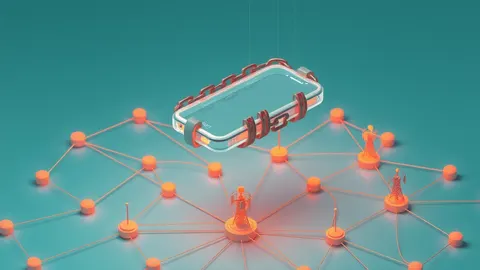
Encryption protects your message content in transit, but it does not hide who you contact, when you contact them, or what device you use.

Attackers bypass traditional security perimeters by exploiting logic flaws in application programming interfaces rather than brute-forcing network defenses.

Unverified backups are digital liabilities that consume storage while providing zero protection against data loss or ransomware encryption.

Voice calls bypass email filters and screen alarms, allowing attackers to exploit human trust and urgency to steal access credentials before you realize the danger.

Most monitoring tools alert on noise, not threats, so you must filter traffic by behavior rather than volume to spot silent exfiltration.

Your computer does not know addresses by name, so it relies on a distributed directory that translates human words into machine numbers every time you click a link.

Most API failures occur not during coding, but when the system accepts requests that are technically valid yet logically dangerous.

Most parental controls fail because they block symptoms instead of addressing the underlying network architecture and device policies.

IP spoofing detection relies on identifying traffic that violates routing expectations and connection state rules rather than just blocking unknown addresses.